Hail Claim Denied as Old Damage? Find the Hail Dates
By StormAuditor Editorial Team · Published 2026-10-06 · Updated 2026-10-07
Based on public NOAA and National Weather Service records, published under StormAuditor's methodology and data-source standards. Radar-derived hail sizes are estimates unless attributed to a ground report.
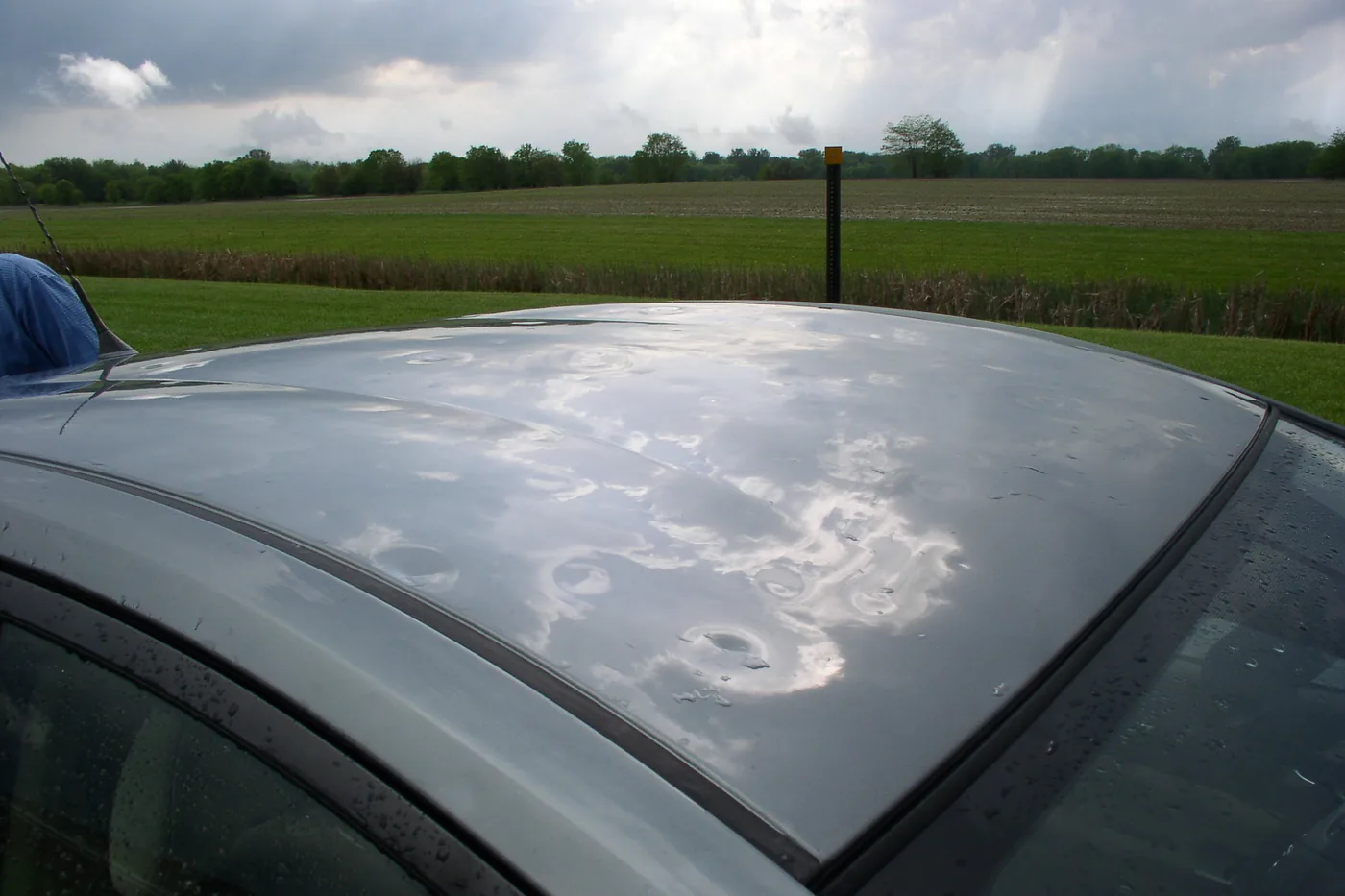
Damage-threshold ranges in this article are general guidance synthesized from industry and federal research — IBHS building-performance research, NWS severe criteria, and product standards such as UL 2218 (hail impact resistance) and ASTM D3161/D7158 (shingle wind ratings). Actual performance depends on product rating, age, installation quality, exposure, and impact characteristics — thresholds describe when damage becomes possible, not when it occurs.
If an insurer says your hail damage is older than the date you reported, start by listing every hail date the public record shows at your address. Compare those dates with your policy period and your reported date of loss, then document the date you are claiming with the estimate and the evidence behind it.
A hail claim denied as "old damage" usually comes down to dates: the insurer believes the hail that marked your roof fell on a different day than the one you reported, often before the policy started or long before you filed. The public weather record can show which days hail was estimated at your address. This guide shows how to list those dates, compare them, and document the one you are claiming.
Why hail damage gets called "old"
Denial letters and adjuster notes tend to give one of a few reasons:
- An earlier storm date. The insurer points to a hail day before your reported date, sometimes before the policy period began.
- Wear and tear. Granule loss, blistering, or cracking is attributed to age rather than impact.
- Late notice. The claim was filed long after the reported date, so the damage could have come from any storm in between.
- No storm on the reported date. The insurer's weather vendor shows no hail at the address that day.
Each of these is a dating question as much as a damage question. That is where the weather record helps: it lists the days hail was estimated at the property, with the estimated size for each.
Step 1: List every hail date at your address
Do not start with the date you remember. Start with every date the record shows, so nothing is missing from the comparison.
- Free check: the Free Report Snapshot answers YES or NO for estimated hail of 0.75 in. or larger at the address.
- Full list: the Hail Report (the $2.99 Single Weather Report) lists every date in the last two years with estimated hail of 0.50 in. or larger or an estimated gust of 40 mph or more at the property. Each date shows the estimated maximum hail size and estimated peak gust at the address.
- Older years: each city page under Storm Data by State summarizes NOAA NCEI Storm Events records back to 2010, so you can see the bigger hail years in your area.
Radar hail sizes come from NOAA MRMS MESH (Maximum Estimated Size of Hail), an estimate of the largest hail at the ground calibrated against ground reports. The MESH explainer covers how to read it.
Step 2: Compare the dates with your policy and your reported date
Put the dates side by side. A simple table makes gaps and overlaps obvious:
| Date | Est. max hail at address | Nearest ground report | Inside policy period? | Notes |
|---|---|---|---|---|
| Reported date of loss | from the Hail Report | size and distance, from the Storm Map or Audit Report | yes / no | warning in effect? |
| Each earlier hail date | from the Hail Report | size and distance, if any | yes / no | larger or smaller than the reported date? |
Things to look for:
- Is your reported date in the record? If the record shows hail at the address that day, note the estimated size and any ground reports nearby.
- Which earlier dates had larger hail? If an earlier date shows larger estimated hail at the address, expect the insurer to ask about it. Know which dates fall before the policy started.
- Is the hail size in the range that damages roofing? Asphalt shingles in typical condition often begin showing functional damage around 1.00–1.25 in., while aged shingles can be damaged by smaller stones and impact-rated shingles resist larger ones. The hail size guide shows each size to scale.
Step 3: Check the reported date against other public sources
A radar estimate is stronger when other sources agree with it. For the date you are claiming, check:
- NWS warnings. Was a severe thunderstorm warning in effect for the address? The NWS defines severe hail as 1 inch or larger (NWS severe weather definitions).
- Ground reports. Spotter and public hail reports in SPC Storm Reports and NWS Local Storm Reports give measured or estimated sizes at specific points and times.
- NCEI Storm Events. The official Storm Events Database adds the NWS's finalized entries, usually a few months after the event.
- State storm days. The Date-of-Loss Database ranks major storm days by state, so you can see whether your date was a widespread hail day.
The Date of Loss Weather Research page explains how these sources fit together.
Step 4: Document the date you are claiming
Once you have the date, document it so an adjuster, appraiser, or attorney can check the work:
- Order an Audit Report for that date. The Audit Report maps the radar hail field over the property, gives the radar size at the property and within 1, 3, and 10 miles, lists the ground reports filed nearby, and shows how the estimate was reached.
- Keep the full date list from Step 1, including dates that do not help you. A complete list is more credible than a selected one.
- Match it to physical evidence. Photos of fresh-looking impacts, dented gutters and vents, and the roofer's inspection notes, each dated.
- Write down the timeline: when you first noticed damage, when you called, and any earlier claims on the roof.
What to ask your insurer
When a hail claim is denied as old damage, ask for the denial and its reasons in writing. Useful questions:
- Which date does the insurer believe the damage occurred, and what weather source supports it?
- Was the roof inspected in person, and can you get a copy of the inspection report?
- What is the policy's process for disputes, such as re-inspection or appraisal?
Your state's department of insurance can explain local rules and deadlines. A public adjuster or attorney can advise on your specific claim.
Limitations
The record shows the estimated hail and wind at the address by date, with the evidence behind each estimate. When a specific dent appeared on your roof is set by inspection. Radar hail is an estimate on a 1-km grid, and ground reports depend on where people were, so a date with no ground report can still have had hail. This is weather research, not legal or insurance advice; your policy, your state's rules, and the inspection decide the claim. See Limitations.
Frequently asked questions
Why was my hail claim denied as old damage?
Usually because the insurer believes the damage came from an earlier storm date, from wear and tear, or that the claim was filed too long after the reported date. Ask which date and which weather source the decision relies on.
How do I find out when it hailed at my house?
Run the Free Report Snapshot for a YES or NO, then get a Hail Report for every date in the last two years with estimated hail of 0.50 in. or larger at the address. City pages summarize NOAA records back to 2010.
Can weather data show when my roof was damaged?
It shows the estimated hail and wind at your address on each storm date. When a specific roof was damaged is determined by inspection, so use the weather record to list and compare candidate dates.
What if an earlier storm had bigger hail than my reported date?
Note it in your date list. Check whether that date falls before your policy started and whether earlier damage was inspected or repaired. Records of past roof work help answer that question.
What size hail damages a roof?
Asphalt shingles in typical condition often begin showing functional damage around 1.00–1.25 in. hail. Aged or brittle shingles can be damaged by smaller hail, and impact-rated (UL 2218 Class 4) shingles resist larger hail.
Start with a free check at the Free Report Snapshot, or get every hail date at the address with a Hail Report.