Hurricane Damage Claim: Check the Wind at Your Home
By StormAuditor Editorial Team · Published 2026-10-06 · Updated 2026-10-07
Based on public NOAA and National Weather Service records, published under StormAuditor's methodology and data-source standards. Radar-derived hail sizes are estimates unless attributed to a ground report.
Damage-threshold ranges in this article are general guidance synthesized from industry and federal research — IBHS building-performance research, NWS severe criteria, and product standards such as UL 2218 (hail impact resistance) and ASTM D3161/D7158 (shingle wind ratings). Actual performance depends on product rating, age, installation quality, exposure, and impact characteristics — thresholds describe when damage becomes possible, not when it occurs.
For a hurricane damage claim, look up the wind at your own address, not the storm’s headline category. Find the estimated peak gust at the property on each tropical-storm day, the nearest measured station gusts, and the warnings in effect. Keep wind and water separate: storm surge and flood are different perils.
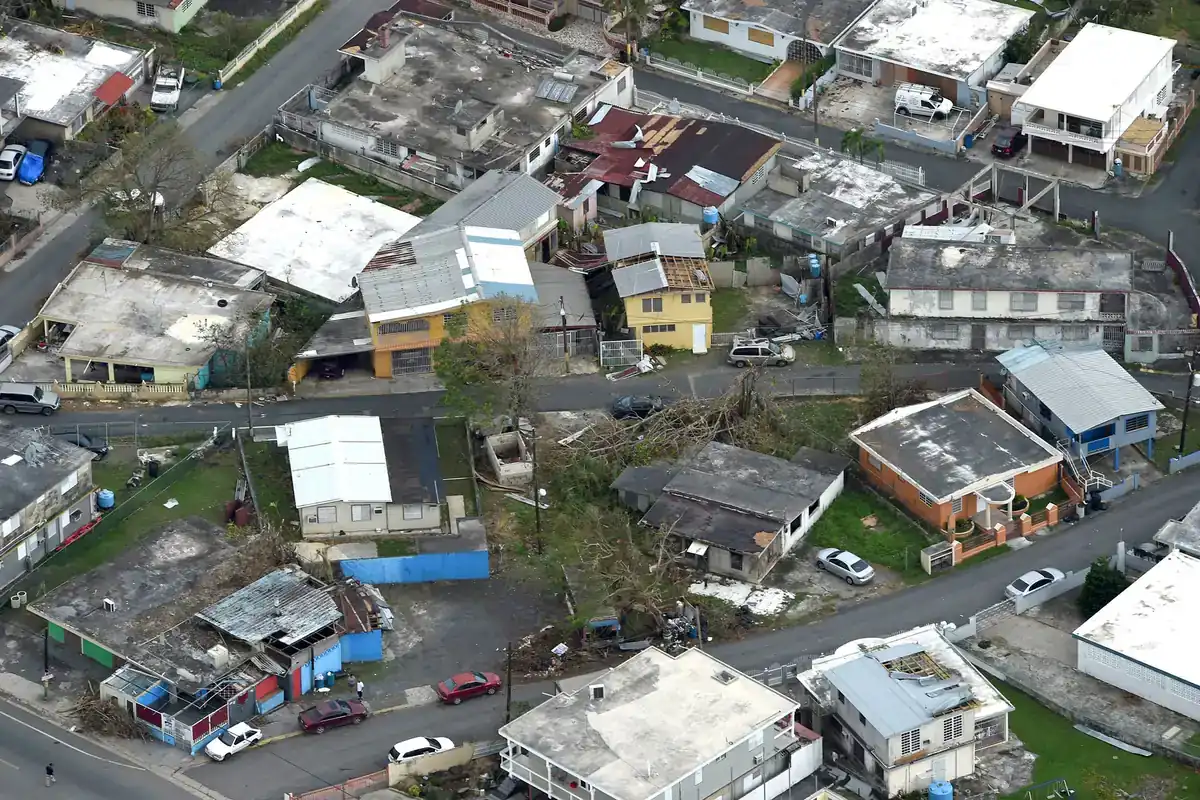
A hurricane damage claim needs the wind at your address, not the storm's category at landfall. A Category 3 landfall can bring only tropical-storm-force gusts to a house well inland, and a weak hurricane can still produce damaging gusts in a squall band. This guide explains how to look up the estimated peak gust at a property for each tropical-storm day, how wind differs from storm surge and flood, and what to keep for the claim.
Wind, storm surge, and flood are separate perils
A hurricane brings several hazards at once, and insurance treats them differently:
- Wind. Damage from gusts and wind-borne debris: shingles, siding, fences, trees, windows.
- Storm surge. The National Hurricane Center defines storm surge as "an abnormal water level rise generated by a storm over and above the predicted astronomical tide" (NHC storm surge overview). NHC calls it the leading cause of fatalities from hurricanes.
- Flood. Rising water from surge, heavy rain, or overflowing rivers.
- Wind-driven rain. Water pushed through openings by wind; see Wind-Driven Rain Damage.
According to the National Association of Insurance Commissioners, standard homeowners policies do not usually cover flood damage; flood coverage comes from the National Flood Insurance Program or a private flood policy. That is why wind and water damage are often documented and adjusted separately after a hurricane.
Deductibles can differ too. The Insurance Information Institute reports that 19 states and the District of Columbia have hurricane deductibles, typically 1% to 5% of the home's insured value. What triggers them, such as a named storm or a hurricane watch or warning, varies by state and insurer, so check your policy's wording.
Hurricane wind speeds by category
The Saffir-Simpson Hurricane Wind Scale rates hurricanes by maximum sustained wind (NHC):
| Classification | Maximum sustained wind |
|---|---|
| Tropical storm | 39–73 mph |
| Category 1 hurricane | 74–95 mph |
| Category 2 hurricane | 96–110 mph |
| Category 3 (major) | 111–129 mph |
| Category 4 (major) | 130–156 mph |
| Category 5 (major) | 157 mph or higher |
NHC's "maximum sustained surface wind" is the highest one-minute average wind at 10 meters with unobstructed exposure (NHC glossary). It is the strongest wind anywhere in the storm, usually in the eyewall, not the wind at every address under it. NHC also notes that the scale does not account for storm surge, rainfall flooding, or tornadoes.
Sustained wind vs. the gust at your address
Two numbers get mixed up after every hurricane:
- The advisory's maximum sustained wind describes the storm as a whole.
- The peak gust at a property is the brief, highest wind at one location. Gusts run higher than the sustained wind at the same spot, and they do most roof damage.
StormAuditor reports the estimated peak gust at the property coordinates for each date. The Wind Gust vs. Sustained Wind article explains the difference, and the Wind Speed Guide shows what each gust band can damage.
Why the wind at your address differs from the category
The category is a single number for a storm hundreds of miles wide. At your address, these matter more:
- Distance from the center. Hurricane-force winds usually extend tens of miles from the center; tropical-storm-force winds reach much farther.
- Weakening over land. Friction and the loss of warm water weaken winds after landfall, so inland gusts are usually lower than coastal ones.
- Rain bands. Thunderstorms in outer bands can produce short, strong gusts and even brief tornadoes well away from the eyewall.
- Exposure. Open water, flat farmland, and hilltops get stronger gusts than wooded or built-up areas.
So two houses in the same county can see very different peak gusts from the same storm, and the record for each address is what supports a wind claim.
How to look up the wind at your address
StormAuditor's wind engine classifies each day as tropical, convective, or synoptic and spreads the measured gusts at the matching scale; the Audit Report names the event type for its date (see also Wind History by Address). To find the wind at a property:
- Run the Free Report Snapshot. The Free Report Snapshot answers YES or NO: does the record show an estimated gust of 45 mph or more, or hail of 0.75 in. or larger, at the address? 45 mph is StormAuditor's screening threshold, set below the NWS severe level of 58 mph.
- Get the dates and gusts. A Wind Report (the $2.99 Single Weather Report) lists every date in the last two years with an estimated gust of 40 mph or more at the property, with the estimated peak gust for each. A hurricane often spans two or three dates.
- Check measured gusts. The Storm Map shows station peak gusts, storm reports, and warnings by day, so you can see what nearby instruments recorded.
- Document the date you claim. The Audit Report lists the instruments behind the estimate, their distances from the property, rejected readings, and the arithmetic.
Address-level wind estimates cover the last two years. For older storms, city pages under Storm Data by State summarize NOAA NCEI Storm Events records back to 2010.
What to document for a hurricane wind claim
- Dates and times. When the strongest wind arrived, from the record and your own notes. Many hurricanes affect a property over more than one calendar day.
- The wind record: estimated peak gust at the address, nearby measured gusts, and any warnings in effect, such as hurricane or tropical storm warnings.
- Photos separating wind from water. Roof and siding damage, fallen trees, and broken windows on one side; water lines, debris lines, and flooded rooms on the other.
- Water-line measurements inside and outside, if there was flooding. Insurers use them to separate flood damage from wind damage.
- Temporary repair receipts for tarps, boarding, and water removal.
Limitations
An estimated gust is the wind the public record supports at the property coordinates, not a measurement at your house. Instruments often fail or lose power in strong hurricanes, which leaves gaps in the measured record. StormAuditor does not estimate storm surge or flood depth, and it does not determine damage or coverage. See Limitations.
Frequently asked questions
How do I find the wind speed at my house during a hurricane?
Look up the estimated peak gust at your address for each storm date. The Free Report Snapshot gives a quick YES or NO, a Wind Report lists the estimated gust for every date, and the Storm Map shows measured station gusts nearby.
Does the hurricane's category tell me the wind at my house?
No. The category reflects the storm's maximum sustained wind, usually near the eyewall. The wind at your address depends on your distance from the center, how far inland you are, rain bands, and exposure.
What is the difference between wind damage and storm surge damage?
Wind damage comes from gusts and wind-borne debris. Storm surge is ocean water pushed ashore by the storm. Insurers usually treat surge and other flooding as flood, which standard homeowners policies typically do not cover.
What wind speed is a tropical storm or a hurricane?
A tropical storm has maximum sustained winds of 39–73 mph. A hurricane has sustained winds of 74 mph or more, and Category 3 and above (111 mph or more) are major hurricanes, per the National Hurricane Center.
What is a hurricane deductible?
A separate deductible for hurricane damage, often a percentage of the home's insured value. The Insurance Information Institute reports 19 states and the District of Columbia have them; when they apply depends on your state and policy.
How far back can I look up hurricane wind at an address?
Address-level estimated gusts cover the last two years. NOAA storm records on StormAuditor's city and state pages go back to 2010.
Check your address with the Free Report Snapshot, or get every storm date and gust with a Wind Report.