Severe Weather Trends and Research in Alaska
By StormAuditor Editorial Team · Published 2026-07-14 · Updated 2026-09-30
Based on public NOAA and National Weather Service records, published under StormAuditor's methodology and data-source standards. Radar-derived hail sizes are estimates unless attributed to a ground report.
Damage-threshold ranges in this article are general guidance synthesized from industry and federal research — IBHS building-performance research, NWS severe criteria, and product standards such as UL 2218 (hail impact resistance) and ASTM D3161/D7158 (shingle wind ratings). Actual performance depends on product rating, age, installation quality, exposure, and impact characteristics — thresholds describe when damage becomes possible, not when it occurs.
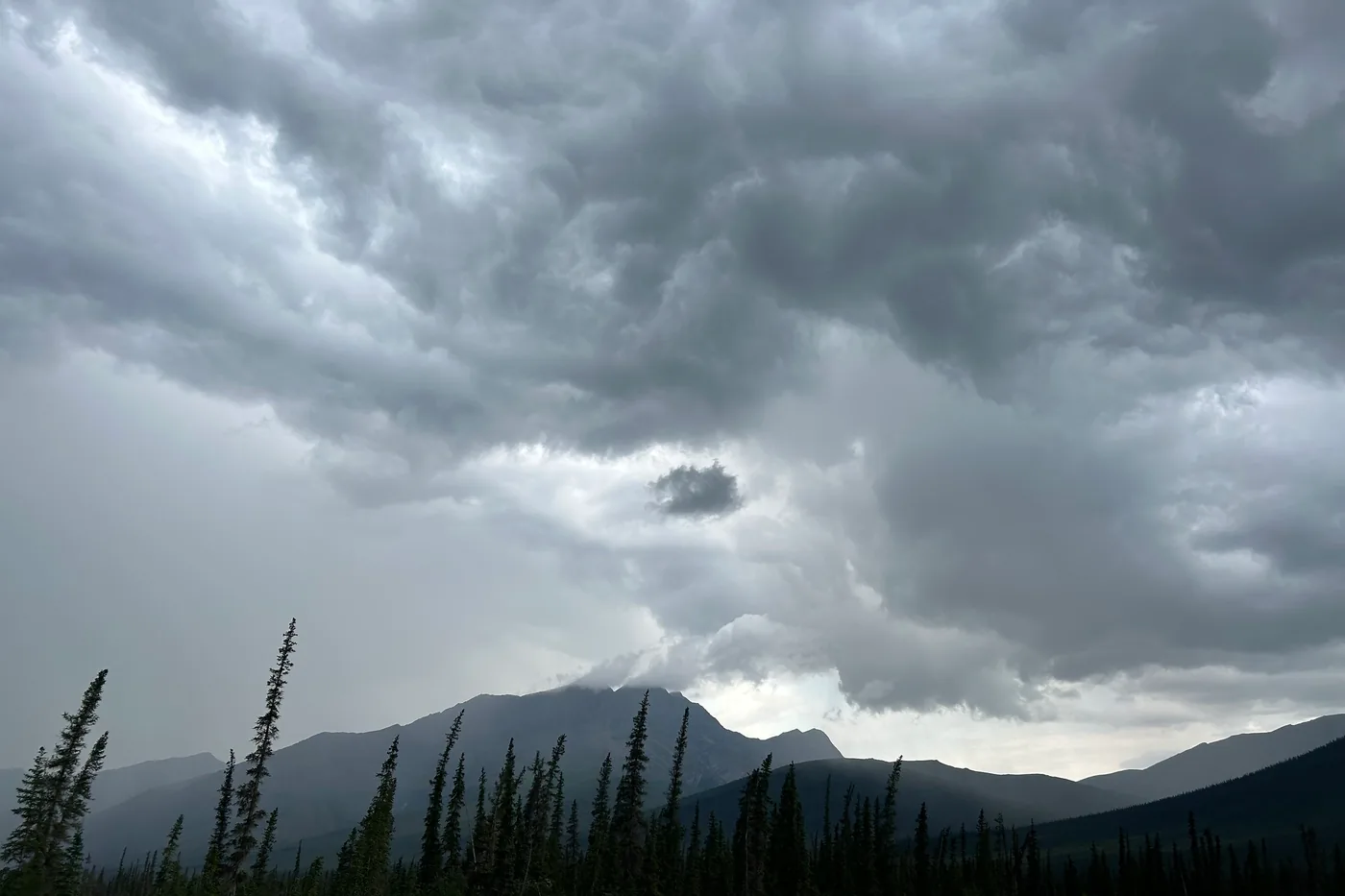
While often associated with cold, Alaska does experience severe weather. StormAuditor provides tools to research historical storm events, including hail and wind, across the state.
Introduction
Think of severe weather and states like Oklahoma or Kansas come to mind. But Alaska is huge and varied, and it gets weather that can reach severe levels too. That ranges from strong wind to hail. Owners, insurers, and researchers all need to know Alaska's severe weather patterns. StormAuditor has tools to explore the record of these events.
What Is Alaska's Severe Weather Like?
Alaska does not get the big tornado outbreaks of the Great Plains. Its severe weather is more often strong wind and hail.
- Tornadoes: Rare, but they do happen.
- Hail: Can fall in the warmer months, mainly in the interior and south-central regions. Hail storms may be less frequent than in other parts of the U.S., but they still pose risks and can damage property.
- Strong wind: More common, mainly along the coast and in the mountains. These winds can top the National Weather Service (NWS) severe thunderstorm level of 58 mph (50 kt). They can bring down trees, cut power, and stress buildings.
Knowing how often these events happen, and how strong they get, helps you prepare and judge the impact.
How StormAuditor Helps You Research Past Storms
StormAuditor gathers and presents weather history. That makes it easier to research past severe weather in Alaska. For hail and wind, we use advanced methods to give detailed estimates:
- Hail: Our Storm Auditor Hail Estimate v2 (SAHE-2) uses radar hail swaths: the Maximum Estimated Size of Hail (MESH). They come from sources like MRMS, with a size estimate for each grid cell. We check them against storm reports from people, from the Storm Prediction Center (SPC). Together, these give a full picture of hail at or near a location. If a property sits inside the ~1-km radar cell, that estimate is reported at the property. If not, we report the closest data within 1, 3, or 10 miles.
- Wind: Our Storm Auditor Wind Estimate (SAWE-2) combines several inputs. It starts from the NOAA URMA grid, the analysis of record, read at the address. HRRR is the fallback. It then corrects that background with gusts measured at ASOS/AWOS stations and NWS Local Storm Reports marked as measured.
We also give past NWS severe weather warnings, with maps of the areas under a severe thunderstorm or tornado warning. A property inside a warning area was in an area of concern. That does not always mean it got the storm's peak.
How to Research a Date of Loss in Alaska
Need to research weather at a specific Alaska property? StormAuditor has simple tools:
- Use the Address Lookup tool: Enter an address and a date in our [/address-lookup] tool. You get a property-level weather report with the hail, wind, and NOAA warnings for that place and date.
- Follow the Date of Loss Research workflow: For more guidance, use our [/date-of-loss-weather-research] workflow. It walks you step by step through one date of loss, using all the data sources well.
StormAuditor draws on trusted sources such as NOAA, the NWS, SPC, and IEM (Iowa Environmental Mesonet) archives. Our goal is a clear, data-backed account of the weather that matters to your question.
Limitations
Weather history and our estimates have limits. It helps to know them:
- Radar hail estimates (MESH) can under-estimate wet hail. They can over-estimate in very strong reflectivity cores.
- Weather stations measure wind, but they are spread apart. They may miss very local events like microbursts, so peak gusts between stations can be higher than reported.
- NWS warnings cover a whole area and time window. A property inside one was under an alert, but did not always get the exact peak conditions.
- StormAuditor gives ESTIMATES, not direct measurements. Our reports do not replace professional inspections to find what caused damage. We do not give legal, insurance, or engineering advice.
Related StormAuditor tools
- Property-Level Historical Weather Report
- Storm Auditor Wind Explorer
- Storm Auditor Hail Explorer
- Date of Loss Research Guide
- Our Wind Estimation Methodology
- Our Hail Estimation Methodology
- StormAuditor Data Sources
- StormAuditor Limitations
- Sample StormAuditor Report
FAQ
Q: Does Alaska get tornadoes?
A: Rarely, but they have happened. They are far less frequent than in the Great Plains. Still, they are part of the state's severe weather record.
Q: What is severe hail in Alaska?
A: Alaska uses the national standard. Hail is severe at 1.00 inch (quarter size) or larger. Significant severe hail is 2.00 inches (hen egg) or larger.
Q: Where does StormAuditor get its weather history for Alaska?
A: From several trusted sources: NWS/NOAA severe weather warnings, SPC storm reports, IEM archives, and the NCEI Storm Events Database. We also use MRMS MESH radar data through Hail Explorer and NOAA ASOS/AWOS station records.
Q: Can StormAuditor tell me if a storm damaged my Alaska property?
A: StormAuditor gives weather history. We estimate conditions at or near your property at a given time. We do not decide whether damage happened or what caused it. A qualified inspector or engineer should make that call.
Q: Why research past weather in Alaska?
A: It helps owners, insurers, and builders understand a place's past risk. That helps with underwriting, claims, and planning upkeep.