Documenting Hail Damage: A Guide for Property Owners
By StormAuditor Editorial Team · Published 2026-07-15 · Updated 2026-09-23
Based on public NOAA and National Weather Service records, published under StormAuditor's methodology and data-source standards. Radar-derived hail sizes are estimates unless attributed to a ground report.
Damage-threshold ranges in this article are general guidance synthesized from industry and federal research — IBHS building-performance research, NWS severe criteria, and product standards such as UL 2218 (hail impact resistance) and ASTM D3161/D7158 (shingle wind ratings). Actual performance depends on product rating, age, installation quality, exposure, and impact characteristics — thresholds describe when damage becomes possible, not when it occurs.
Understanding how hail damage is documented after a storm is crucial for property owners, contractors, and adjusters. This guide covers the essential steps and data sources used to assess and document hail impact.
How Hail Damage Is Documented After a Storm
After a hailstorm, good records are the first step. Property owners, contractors, and adjusters all need them. The best records join two things:
- what an on-site inspection finds, and
- what the weather record shows for that date and place.
This guide covers the methods and data sources used to document hail damage. It also shows where StormAuditor's storm history reports fit in.
What Happens After a Hailstorm?
Safety comes first. Then comes a first look at the damage. Owners should check the roof, siding, windows, and vehicles for clear signs of hail.
A quick look is only a start. A professional inspection and careful records matter for date-of-loss research and for planning repairs.
Common signs of hail damage:
- Roofs: Lost granules on asphalt shingles. Dents, cracks, bruises, or soft spots. Exposed fiberglass mat. Asphalt shingles often begin to show functional damage from hail about 1.00" to 1.25" across. Softer or older shingles can bruise from smaller hail. Metal roofs can dent from hail too small to fracture an asphalt shingle; whether a dent is cosmetic or lets water in depends on gauge, panel type, and condition.
- Gutters and downspouts: Dents and dings.
- Siding: Cracks, chips, or impact marks. Softer materials like vinyl and aluminum show them most.
- Windows and skylights: Cracks or breaks. Breakage becomes common with hail about 1.75" and larger.
- Decks and fences: Splinters or impact marks.
How StormAuditor Documents Hail Events
StormAuditor gives hail history for a single property. Our method, SAHE-2 (Storm Auditor Hail Estimate v2), draws on three public sources:
- MRMS MESH (Maximum Estimated Size of Hail): Our main source. These radar swaths are on the Hail Explorer. Each grid cell carries its own size estimate. We report the estimate at a property when the address sits inside the ~1-km radar cell. The swaths show the largest estimated size, and also the storm's path and strength across an area.
- SPC Storm Reports: Hail sizes seen on the ground and sent to the Storm Prediction Center (SPC). Trained spotters, police, and the public file them. They check the radar estimates against what people saw.
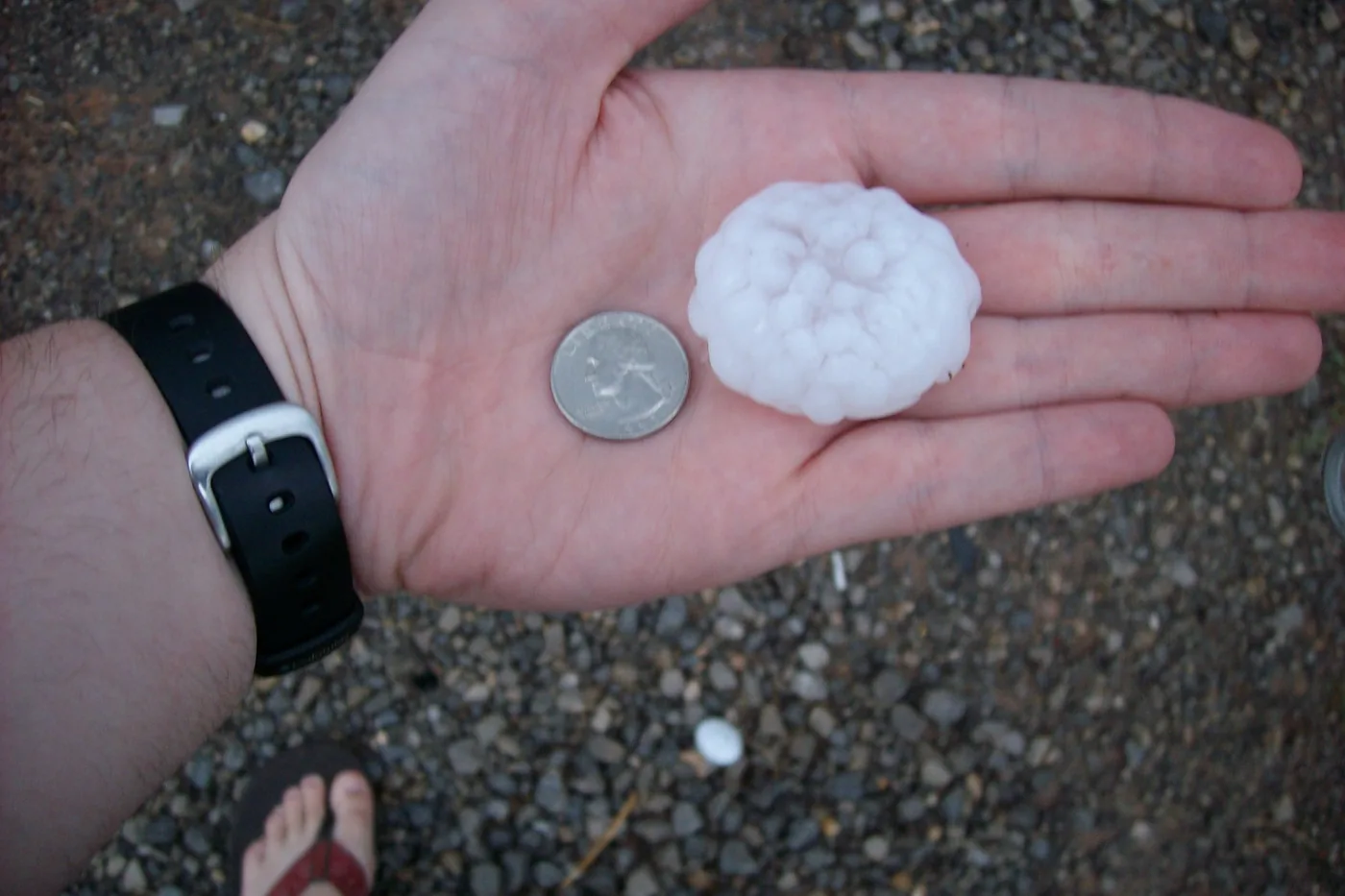
- NWS Severe Thunderstorm Warnings: A severe thunderstorm warning means hail of 1.00" (quarter size) or larger, or gusts of 58 mph or more, were expected or seen in the warning area. Being inside a warning area does not mean a property got the peak of the storm. It does show that severe weather was possible there. Our address lookup tool shows whether a property was inside one.
Together, these sources make up our hail reports for date-of-loss research. A report gives the largest estimated hail size at the address. It also gives the date and time of the storm, which ties the damage to a specific event. StormAuditor gives estimates, not measurements. We do not give legal, insurance, or engineering advice.
Practical Guidance for Documenting Hail Damage
Good records mix on-site evidence with a reliable weather record.
For property owners:
- Safety first: Wait until the storm has passed and it is safe to look.
- Take photos and video: Do it right after the storm, in good light. Get wide shots of the property and close-ups of each spot. Note the date and time.
- Call a professional: A reputable roofer or licensed inspector can do a full check.
- Get the weather record: Use StormAuditor's address lookup tool to get a hail report for your property. It gives you hail size and storm timing for your date-of-loss research.
- File promptly: Contact your insurer as soon as you suspect damage.
For contractors and adjusters:
- Inspect in detail: Record all damage with high-resolution photos and notes. Measure hail marks and the spacing between hits.
- Know the standards: Hail impact classes come from UL 2218. Class 4 shingles are the top class. They are tested against a 2" steel ball.
- Use StormAuditor data: Add our property-level hail details to your damage assessment. Our methodology page explains how SAHE-2 estimates come from MRMS MESH data and SPC reports. This record can support your findings.
- Research the date of loss: Our Date of Loss Weather Research tools pinpoint storm events and the weather that came with them.
Limitations
Every data source has limits:
- Radar MESH can under-estimate wet hail. It can over-estimate in very strong reflectivity cores.
- Hail and severe storms are very local. A warning covers an area and a time window. A property inside it was under a warning, but did not always get the peak conditions.
- StormAuditor gives estimates, not measurements. We do not give legal, insurance, or engineering advice.
- Our data shows what weather occurred. Whether it caused the damage is for qualified inspectors or engineers to decide.
For more, see our limitations page.
Related StormAuditor Tools
- Address Lookup: Get a property-level historical weather report.
- Hail Explorer: See historical hail swaths and reports.
- Storm History: Full historical storm reports.
- Methodology - Hail: How StormAuditor estimates hail.
- Sample Report: See an example StormAuditor report.
FAQ
Q: What size hail causes damage to asphalt shingles?
A: Asphalt shingles often begin to show functional damage from hail about 1.00" to 1.25" across. Softer or older shingles can bruise from smaller hail.
Q: How can I tell if my roof has hail damage?
A: On asphalt shingles, look for lost granules, dents, cracks, or exposed fiberglass mat. On metal roofs, look for dents or dings. A professional inspection gives the full picture.
Q: Can StormAuditor confirm hail damage at my property?
A: StormAuditor gives property-level hail size estimates and storm data for date-of-loss research. We show what weather occurred: estimated hail size, wind gusts, and warnings. We do not confirm what caused damage. That takes an on-site inspection by a qualified professional.
Q: What data does StormAuditor use for hail reports?
A: Three sources: MRMS MESH (the radar-derived Maximum Estimated Size of Hail), SPC (Storm Prediction Center) reports of observed hail, and NOAA/NWS severe thunderstorm warning areas.
Q: When should I get a professional inspection after a hailstorm?
A: Soon after a significant hailstorm if you suspect damage. This matters most when hail of 1.00" (quarter size) or larger was reported in your area.